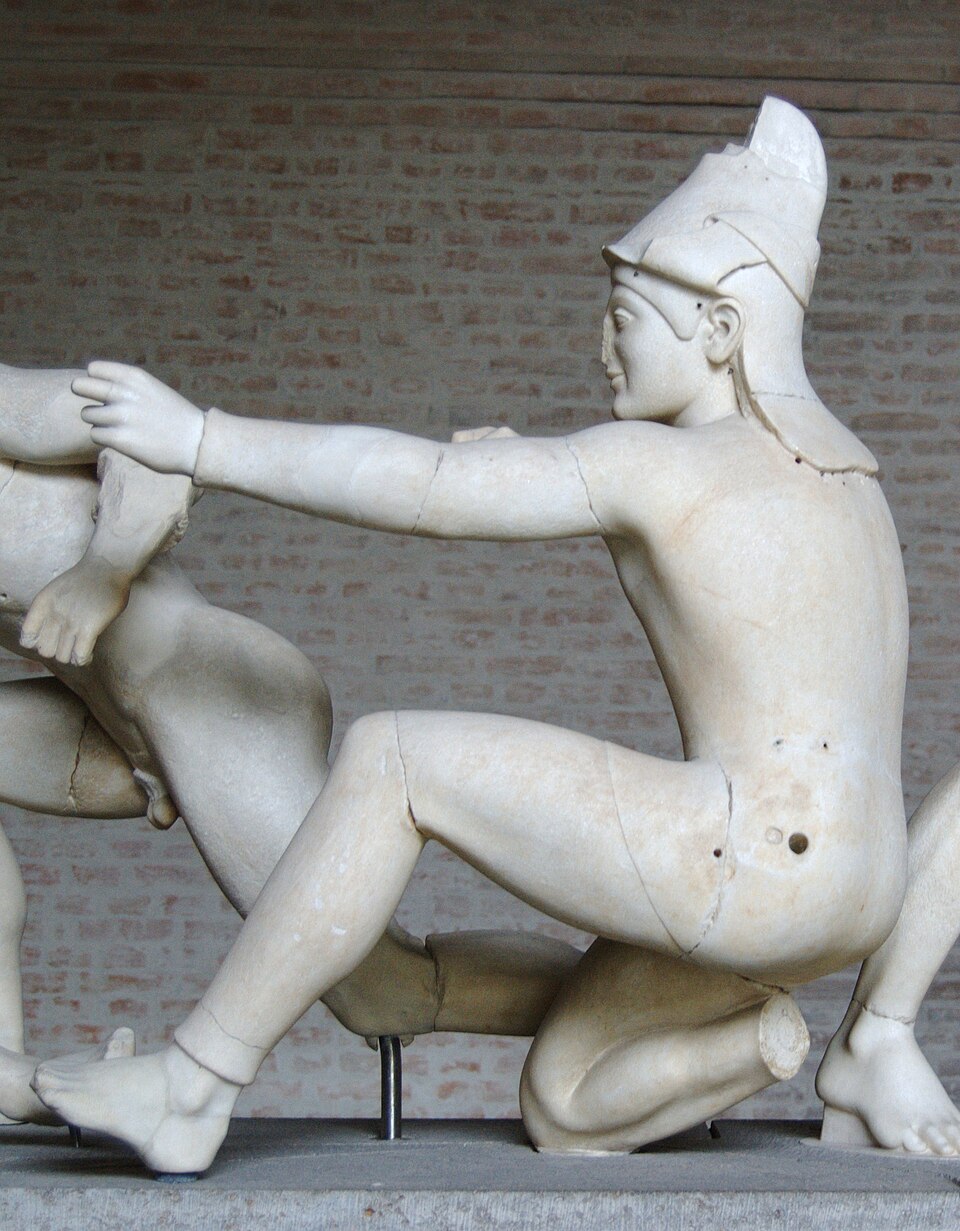
Paris of Troy: Abandonment, Fateful Choices, and a City's Downfall
The epic saga of Troy is woven with threads of heroism, tragedy, and monumental decisions, none perhaps more pivotal than those surrounding King Priam's son, Paris. Born under a dark prophecy and destined to ignite a war that would raze a civilization, Paris’s life is a masterclass in how individual choices, alongside the actions of those around them, can shape the destiny of an entire city. From the moment of his birth, through his controversial return, and the fateful judgment that sealed Troy's doom, Paris embodies the complex interplay of free will and inescapable fate.
As one of King Priam's many sons—ancient sources suggest a staggering fifty sons and fifty daughters, born to queens like Arisbe and the more famously known Hecuba—Paris's story stands out. Unlike his elder brother Hector, the valiant protector of Troy, Paris's legacy is one of infamy and the catalyst for the city's destruction. His narrative offers profound insights into the burdens of leadership, the nature of prophecy, and the devastating consequences of passion over prudence.
The Burden of Prophecy: Paris's Unfavorable Birthright
The story of Troy's eventual demise begins not on the battlefield, but in the royal chambers with a chilling prophecy concerning the newborn Paris. An Old Man, a figure of ancient wisdom and foreboding, declared that this infant King Priam's son would grow up to cause his father's death and, by extension, the downfall of their magnificent city. Queen Hecuba, driven by maternal terror and a desire to protect her kingdom, immediately decreed that the child must be killed.
King Priam, however, found himself ensnared in a profound moral dilemma. The life of an innocent child weighed against the perceived safety of his entire populace. He reflected on the agonizing choice: "What means one life when the choice involves a whole city?" In the end, his duty as king, perhaps tinged with a father's hesitation, led him to compromise. He handed the baby to a Young Man, ordering him to abandon Paris on a mountainside, a cruel fate intended to circumvent the prophecy without directly spilling his own child's blood.
Yet, fate often finds a way to circumvent even the most calculated human interventions. The Young Man, moved by compassion or perhaps sensing the futility of defying destiny, did not kill Paris. Instead, he entrusted the infant to shepherds, who raised him as their own. This act of quiet defiance set the stage for Paris's return, demonstrating early on that some destinies, once set in motion, are incredibly difficult to alter, regardless of the choices made by kings or commoners.
A Prince Returns: The Unraveling of Troy's Fate
Years later, a twist of fate brought the abandoned prince back into the fold of Trojan royalty. While hunting on Mount Ida with his eldest and most revered son, Hector, King Priam witnessed a remarkable sight. Hector attempted to subdue a wild bull, only for a mysterious, courageous youth to leap onto its back and ride it away. This young man, possessing an undeniable heroic spirit, returned to them and, upon joining Hector among the heroes of Troy, revealed his name: Paris.
King Priam, perhaps unknowingly fulfilling his own secret wish that his son had survived, was filled with overwhelming joy. Overriding the lingering memories of the dark prophecy and the initial foreboding from the Old Man, Young Man, and Nurse, he welcomed Paris back into Troy as a prince, seemingly oblivious to the potential consequences. This was a critical juncture, a fateful choice by Priam himself, to embrace a past he had sought to erase, thereby inviting the very doom he had tried to prevent. The return of Priam's legacy, complicated by this decision, would soon plunge Troy into chaos.
The uneasy relationship between the brothers, Hector and Paris, was evident even then. While Hector embodied duty and martial prowess, Paris, though brave, soon revealed a more impulsive nature. Gossip at the wedding of Hector and Andromache hinted at their strained bond, noting Paris's departure from Troy to the court of Menelaus in Sparta. It was there that Paris's inherent charm and impulsive desires would set the stage for the most catastrophic of his choices, irrevocably linking his personal destiny with that of his city.
The Judgement of Paris: A Choice that Sealed a City's Doom
The narrative of Paris and Helen becoming lovers in Sparta is often portrayed as an irresistible force, a divine hand guiding Paris towards his destiny. He himself questioned whether any true choice existed, feeling an undeniable pull towards Helen. As if in answer, the god Hermes appeared, presenting Paris with the infamous "Judgement of Paris"—a choice between three powerful goddesses: Athene, Hera, and Aphrodite, each offering a distinct path.
- Athene (echoing Hecuba): Offered Paris glory in war, a path of honor and martial renown.
- Hera (echoing Andromache): Offered domestic peace, power, and a stable, prosperous reign.
- Aphrodite (echoing Helen): Simply whispered his name, and he responded with hers, a choice made not consciously for power or glory, but for love, passion, and the most beautiful woman in the world.
Paris's choice, seemingly an unconscious act driven by desire, was nonetheless a definitive decision. By choosing Aphrodite and, implicitly, Helen, he incurred the wrath of Athene and Hera. Their curses were immediate and chilling, explicitly foretelling the doom he would bring to Troy. This moment wasn't just a mythological anecdote; it was the ultimate fateful choice, highlighting how personal desires, when unchecked, can have devastating, far-reaching consequences that ripple across nations and history. It underscores a crucial lesson: sometimes the most alluring path is the one fraught with the greatest peril.
The Price of Passion: Troy Under Siege and the Brothers' Conflict
The abduction of Helen by King Priam's son Paris, whether by force or by mutual consent, was the spark that ignited the Trojan War. As the might of the Achaean armies descended upon Troy, the city found itself under relentless siege, a direct consequence of Paris's actions. Within Troy's walls, the personal dramas of the royal family played out against the backdrop of an epic conflict. Hector, the city's greatest champion, often taunted Paris with cowardice, shaming him for having fled from Menelaus in battle. The weight of his brother's actions, and the war they caused, bore heavily on Hector.
King Priam, caught between his duty as king and his affection for his son, often intervened, urging his sons to put aside their differences and fight together for Troy. His efforts to unite them, to send them back into the fray side-by-side, reveal the immense pressure he faced and his desperate attempts to stave off the inevitable. Yet, the deep-seated friction between Hector's noble sense of duty and Paris's impulsive nature remained, a microcosm of the divided city itself.
As the war raged, the Old Man, perpetually fearful for Troy, desperately called upon Hermes, seeking insight into the tide of battle. His plea led him to a peaceful scene in Achilles' tent, where the Greek hero sang a lyrical song of his homeland to his friend Patroclus. But this peace was short-lived. Patroclus, shamed by Achilles' withdrawal from battle, made his own fateful choice: to don Achilles' armor and lead the Myrmidons, a decision that would lead to his tragic death and bring Achilles back into the war with devastating vengeance. The intertwining destinies of King Priam's sons and their enemies became increasingly clear, each choice, each act of bravery or folly, drawing Troy closer to its final, fiery end.
Conclusion
The story of Paris, King Priam's son, is more than a tale of ancient mythology; it is a profound exploration of abandonment, fateful choices, and a city's tragic downfall. From the initial prophecy at his birth that sealed his fate to the compassionate defiance that saved him, and finally, to his own impulsive decision in the Judgement of Paris, every turn in his life was a pivot point for Troy. King Priam's initial hesitation, his subsequent joy and acceptance, and his later struggles to manage the fallout from Paris's actions underscore the immense weight of leadership and parental decisions.
Paris's narrative serves as a timeless reminder that individual actions, especially those driven by passion or perceived destiny, can have colossal consequences. His story, deeply intertwined with the heroic efforts of his brother Hector and the ultimate destruction of their magnificent city, resonates with themes of free will versus fate, the perils of unchecked desire, and the enduring human struggle to navigate a world where choices, however small, can alter the course of history. Ultimately, Paris of Troy stands as a cautionary figure, his life a testament to how one man's choices can indeed be the catalyst for an entire civilization's demise.